
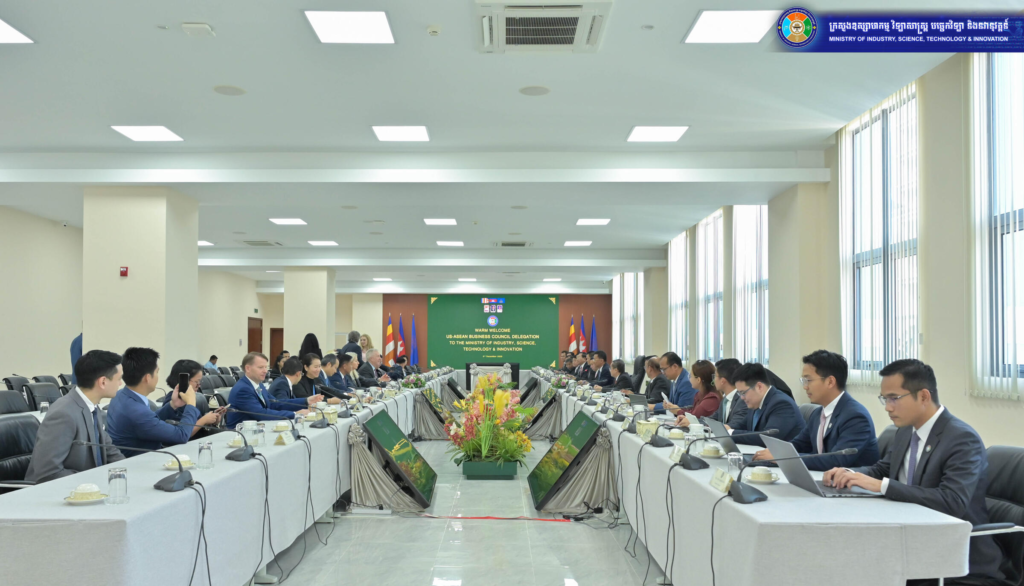
The announcement that the US-ASEAN Business Council (US-ABC) plans to establish a permanent office in Cambodia is on the surface a diplomatic win. But when you layer it on top of Cambodia’s recent agreement to eliminate tariffs on US imports, it suggests a deeper commercial shift, potentially a strategic pivot point.
𝗪𝗵𝘆 𝗱𝗼𝗲𝘀 𝗶𝘁 𝗺𝗮𝘁𝘁𝗲𝗿?
- Operationalizing Free Trade: The tariff agreement opened the door, and a permanent US-ABC office would help step through it. In theory, the office could help transition US-Cambodia trade from facilitating sourcing (buying travel goods, footwear, garments) to more actively driving sales of US goods (machinery, tech, agriculture) that can now enter Cambodia duty-free. Whether this materializes at scale remains to be seen.
- Competitiveness: With US goods now able to enter Cambodia at 0% tariff, American heavy industry, tech, and consumer goods have a better chance at price competitiveness against regional alternatives. An in-country office could potentially help navigate non-tariff barriers and licensing challenges – though success will depend on execution and sustained commitment.
- From Factory to Market: This may signal an evolving US perspective on Cambodia – viewing it not just as another factory floor, but as an emerging consumer market worth dedicated institutional presence. The question is whether institutional presence translates into genuine market development. If realized, this would represent tangible commitment beyond diplomacy to commercially integrate Cambodia’s industrial modernization with American supply chains and value-added services, including tech.
- The Risks & The Reality: While this would be a milestone, it introduces a complex balancing act.
- US Policy Consistency: It remains to be seen if this move will translate into concrete deliverables or be subject to the policy unpredictability that has characterized recent years.
- The Geopolitical Balancing Act: There is valid concern regarding how a deepening US footprint would interact with Cambodia’s relationship with China. How will Cambodia harmonize this with its strong ties with the world’s largest manufacturer – leading in 5G, AI, renewable energy, electric automobiles, and infrastructure – and its top trading partner and source of investment and ODA?
Congratulations to Cambodia and US-ABC on this development. The opportunity is substantial, but it will require sophistication in strategic calibration to welcome American investment while maintaining vital partnership with China, without alienating either.